
About Panama

Financial Services


Panama at a Glance
Panama & Global Links
Panama Real Estate
Panama City Real Estate
Bocas del Toro Real Estate
Boquete Real Estate
Altos Del Maria Real Estate
El Valle Real Estate
Panama Island Real Estate
Panama Beach Real Estate
Panama Real Estate Investment
Join Investors NetworkNew Section!
Business for SaleNew Section!
Doing Business in
Panama
New Section!
Panama Company Formation New Section!
Facts for Travelers
Beaches & Islands
Mountains & Highlands
Rainforests & Ecotourism
Living in Panama
Directory
Real Estate Investment Tours New Section!
Our Services
About Us
Alliances & ReferralsNew Section!
Testimonials
Contact Us
Home
 
 
  Investing, retiring and living in Panama


Related Links

Why Panama??
Doing Business in Panama
Relocate to Panama
Directory


Services

Legal Services
Consulting
Relocation

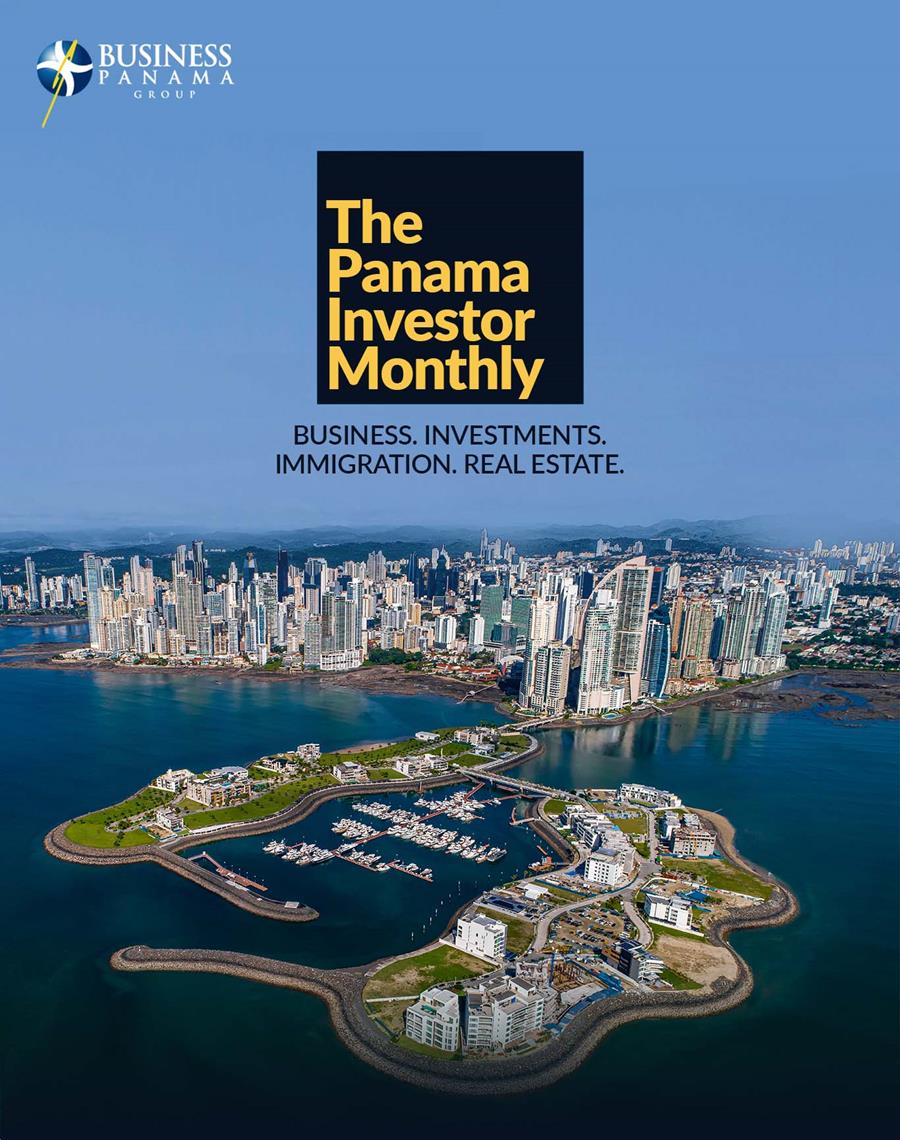
With its skycrapers glinting in the intensely bright sun, the center of modern Panama City resembles a miniature Manhattan.

Panama has the most modern and successful international banking center in Latin America. As of the month of December 2006, it is reported that the International Banking Center (IBC) is made up of 87 banks – of these 42, including the two official banks – have a General License, 38 have an International License and seven a Representation License. As of the month of October of 2006 the total assets amounted to US$43,366 million. The Financial Intermediation activity represents 7.5% of the Gross Internal Product (GIP).

The IBC has more than fourteen thousand employees, with a payroll that exceeds the US$165 millions a year, and an investment in fixed assets – buildings, equipment and furniture – of more than US$400 millions.

International Banking Center of Panama

There are three type of banking licenses in Panama: the General License allows undertaking local and foreign operations. On the other hand, the International License only authorizes for foreign operations, but there is allowed participation in the national interbank market. The Representation License is granted to the offices of foreign banks from which there is performed the marketing of services, as well as visits of active and potential clients in Panama and the region.

Law No. 10 of 2002 establishes norms to the microfinance system, authorizes the organization and functioning of Microfinance Banks, as financial entities that channel resources to micro and small borrowers whose activities are developed in urban and rural areas. This type of banks are regulated by the Bank Superintendence, and their total loan portfolio must have as a minimum 75% of credits with a personal guarantee and must not exceed the 1% of the net patrimony. On the contrary, the loans with a real guarantee must not exceed the 3% of the net patrimony of the bank. For these purposes, it is defined as Micro business the natural or juridical person that creates an economic unit that produces gross revenues or annual invoicing of up to the sum of US$25,000. Differently, the Small Company is the natural or juridical person that constitutes an economic unit with gross income or annual invoicing for an amount between US$25,000 and US$100,000. The Microfinance Banks must have a minimum paid in capital of US$3 million dollars. Today there are only two banks with a Microfinance license and at the month of September of 2006 the loan balance for this type of credit grew to the sum of US$39 millions.

The National Banking System names General License Banks, including the two official banks – Banco Nacional de Panamá and the Caja de Ahorros – and the multinational Banco Latinoamericano de Exportaciones (BLADEX). Up to the month of October 2006, it was recorded that the banks of the system had assets for a value of US$36,303 millions. The International License banks had assets which added to US$7,064 millions.

The private banks with General License presented assets for US$31,396 millions, and of these, US$15,532 millions are found in private Panamanian banks and US$15,864 millions in foreign banks. As of the year 2007 the participation of the Panamanian private banking will be reduced in the local market as a result of the purchase of the largest bank in Panama, the Primer Banco del Istmo (Banistmo), transaction completed by the HSBC bank. The official Banks have assets for US$4,906 millions of dollars.

Closing on the month of October 2006, the internal market presented a loan portfolio that totalled US$16,938 millions. US$8,555 millions of this amount were in banks comprised of private Panamanian capital, US$5,282 millions in foreign banks, and US$3,102 millions were found in the official banks. US$13,354 millions, of the total of local deposits from individuals in the National Banking System, the Panamanian private banks and officials had 71.2%, while the foreign had the 28.8%. This proportion will change in 2007, as was indicated in the previous paragraph, due to the fact that the largest private bank was bought by a foreign bank.

The International Banking Centre began as a result of the advantages of the previous legislation, approved in 1970. This was replaced in 1998 by a new banking law that created the Superintendence of Banks, an institution with complete autonomy, independence and ample powers to practice a strict supervision, including the consolidated supervision of the foreign banks. The law also incorporated other statutes, those of adequacy of capitals based on the average assets according to the risk, further to the guides of Basilea. The Superintendence and the Association are in the analysis and discussion phase of the eventual and programmed adoption of the new Capital Agreement of Basle II. A section of these dispositions is being incorporated to the existing regulation and the rest will be adopted slowly.

The new banking law will maintain:

  • Fundamental elements of the banking confidentiality and the identity of account holders.
  • Continue in force the Numbered Account Law. This is not an obstacle for Panama to have a series of laws, decrees, agreements and regulations for the prevention of Money laundering. Due to its strict dispositions, it serves as a model for other countries.

Panama has unique advantages for banking, financial and commercial businesses, due to the absence of a central bank, a monetary authority and paper currency. Another fundamental characteristic is the use of the North American dollar as the currency legal tender, which has contributed to strengthen the Panamanian IBC from the financial crisis.

Recent Transactions

Mayor merger agreements have been key for the financial market, and will bring new opportunities for the country.

In 2006, the banking sector registered several acquisitions. The purchase of Banistmo by the British HSBC, was one of the most important happenings for this sector, completed on 20 July 2006. The purchase agreement was done by way of US$1,700 millions. At the level of this purchase there were undertaken other agreements such as that of the Continental financial group which acquired the operations in Panama of Banco Atlántico by the way of US$96 millions, where Citigroup purchased the Uno financial group and Corporación UBC Internacional, owner of Banco Cuscatlán. The Banco Aliado made with the retiree loan portfolio of Bancafé.

Another of the banks that opens doors with operations in Panama is Stanford Bank. It will have a seed capital of 15 millions. This group has 70,000 clients in 102 countries and 3,000 multinational employees. One of its main characteristics is that it is kept as a private business and directed to the high end segment of the market. Founded in 1932 as a family business, after 75 years it is a global network of companies that provide financial services. Its executives expect that the bank will have US$100 millions in assets at the end of 2007.

Transparency and regulation

The Latin-American Federation of Banks (“Federación Latinoamericana de Bancos”) (FELABAN) has considered of main importance to make a collection of the totality of the existing legislation regarding money laundering of assets in Latin-American countries members of the Federation.

Panama’s banking law (Decree No. 9) meets the standards of leading financial centers around the world for transparency and regulation.

The organism that has coordinated with most success the international initiatives against money laundering is the Work Group of Financial Action regarding Money Laundering (“Grupo de Trabajo de Acción Financiera sobre el Lavado de Dinero”) (FATF). 

In 1989, the increasing worry that awoke the threat of Money laundering to the international financial institutions and the banking system, moved the leaders of the Group of Seven (which include the heads of state of Germany, Canada, United Status, France, Great Britain, Italy and Japan) to establish the FATF. This new intergovernmental work group, with the capacity to set policies, was assigned the resonsability of examining techniques and tendencies of money laundering, the previous nacional and international action and determines additional measures against money laundering. To date, the members of the FATF are two organizations – the European Commission and the Cooperation Council of the Gulf -- and 29 countries and territories: Argentina, Australia, Austria, Belgium, Brazil, Canada, Denmark, Finland, France, Germany, Greece, Holland, Hong Kong, Ireland, Iceland, Italy, Japan, Luxembourg, Mexico, Norwegian, New Zealand, Portugal, United Kingdom, United Status, Singapore, Spain, Sweden, Switzerland and Turkey.

In 1990, to establish a worldly structural frame of the efforts against Money laundering, the FATF issued The Forty Recommendations. Today, this collection, which included the measures, is the main international norm against Money laundering. The Forty Recommendations and the Interpretation Notes cover the criminal justice system and application of the law, the financial system and its regulation and the international cooperation. The recommendations establish principles of action and provide to the countries the flexibility to apply them according to their circumstances and particular laws. Although it is not a mandatory international convention, many countries have acquired a political compromise to fight Money laundering by means of the application of the recommendations.

Moreover, Panama has turned into one of the leading countries supporting the FATF and OECD movement to implement measures in international financial centers to cope with capital laundering and terrorist financial activities. Tighter controls have been put on banks to report all deposits and withdrawals of more than $10,000, identically as done in the United States.

Bankers’ awareness that Panama has to clean up its image is also making them more thorough about checking the credentials of new customers. The “know your customer” policy includes tighter reference requirements and origin of funds. Nevertheless, banking secrecy continues in place.

Panama´s Stock Exchange
Banking Center

In addition, Panama is one of the most secure international offshore centers in the world. The Panama Stock Exchange is one of the fastest-growing in the region. Since beginning operations in 1990, the local securities market suffered a positive transformation that allowed the widening of the market and increased the number of intermediaries in the first decade of operations. The Market made negotiations of over US$925 millions in titles of the primary market and more than US$200 millions in the secondary market.

Law 1 of 8 July 1999 regulates the requirements to operate in the Stock Market of Panama (“Bolsa de Valores de Panamá”) (BVP), and these are established by the local National Securities Commission (“Comisión Nacional de Valores”) (CNV).

The transactions of the BVP are undertaken by the intermediation of persons authorized and qualified by the CNV.

As of the month of December 2006, the BVP registered a record in the volume of negotiations. The negotiated securities summed a total of US$400,406,386.77. The membership of the BVP is made up of mercantile corporations whose objective is stock trading. These operate as Security Houses, authorized by the CNV. Also, to operate a position in the market it must be also authorized by the BVP and are subject to the regulation and are supervised by the same.

In the segment of capitalization of the stock market, the results have been satisfactory. It is a fact that it sky rocketed to 55.3% at US$8,825 millions de dollars as of 15 December 2006, in comparison to the US$5,681.2 millions of 2005. In 2006 the secondary market of the trading sector, also turned upwards and occupied more than the 30% of the total negotiated.

Investment Opportunities

In the financial industry, diverse investment opportunities exist in banking, investment capital financing, insurance and re-insurance.

The Republic of Panama maintains a firm commitment to fight and maintain a proactive and efficient role against money laundering and the financing of terrorism and organized crime through its different governmental bodies and in close cooperation with other jurisdictions.

Panama´s banking system has effectively achieved the following, among others factors:

  • International Standards
  • International cooperation
  • Modern legislation
  • Competitive advantages.

As a necessary complement of the above, important legislation has been passed by the Panama Legislative Assembly and sanctioned by the President and resulted in relevant Cabinet Decrees being issued by the Executive power. These regulations, listed below, are not only in effect, but has also provided assistance throughout the region and beyond.

  • Law 41 of October 2, 2000, which defines the crime of money laundering with regard to the predicate offenses: qualified fraud, illegal arms trafficking of humans, kidnapping, extortion, embezzlement, corruption of public officers, acts of terrorism, international theft, trafficking of vehicles and drug trafficking.
  • Law 42 of October 2, 2000, which establishes as "accountable persons" in the observance of due diligence for banks, trust companies, currency exchange offices, money transfer service providers, non-bank loan companies, savings and loan cooperatives, securities exchanges, securities clearing houses, securities firms, securities brokers and investment managers.
  • Law 45 of June 4, 2003, by which Chapter VII to Title XII of the Second Book of the Penal Code is added therein under the heading of Financial Crimes, fraud, illegal money transfers, concealing, deleting and counterfeiting accounting books and related documents. Disclosure of classified information, omitting or denying information, price discrimination, signing of fraudulent agreements, collecting financial means without proper authorization, among other types of crimes with their respective sanction.
  • Executive Decree No. 78 of June 5, 2003, which modifies the name of the Financial Analysis Unit (FAU) to Financial Analysis Unit for the Prevention of Money Laundering and the Financing of Terrorism and extends its duties and responsibilities to assets related to the financing of terrorism.
  • Law No. 48 of June 26, 2003, which regulates the operations of money remittance companies.
  • Law No. 50 of July 2, 2003, by which Chapter VI, denominated Terrorism, is added to Title VII of Book II of the Penal Code and sets forth other provisions, This Law defines the crimes of terrorism and the financing of terrorism, turning both into autonomous crimes in our legislation.

This proven commitment by the Republic of Panama against money laundering and financing of terrorism includes both the public and private sector, guarantees that Panama shall continue in this crucial endeavor and fully understands the importance of international coordination and cooperation.

For more information about Investment or Business Opportunities, please click here to contact us.


  Realestate Investment
       
HOMEHOME   contactCONTACT US  sitemapSITEMAP
© Copyright 1997-2008 All Rights Reserved.
Designed by Token Studio
Most photos are courtesy of IPAT and Alfredo Maíquez
 

DISCLAIMER